Signs Your Horse Chestnut Tree Needs Professional Inspection
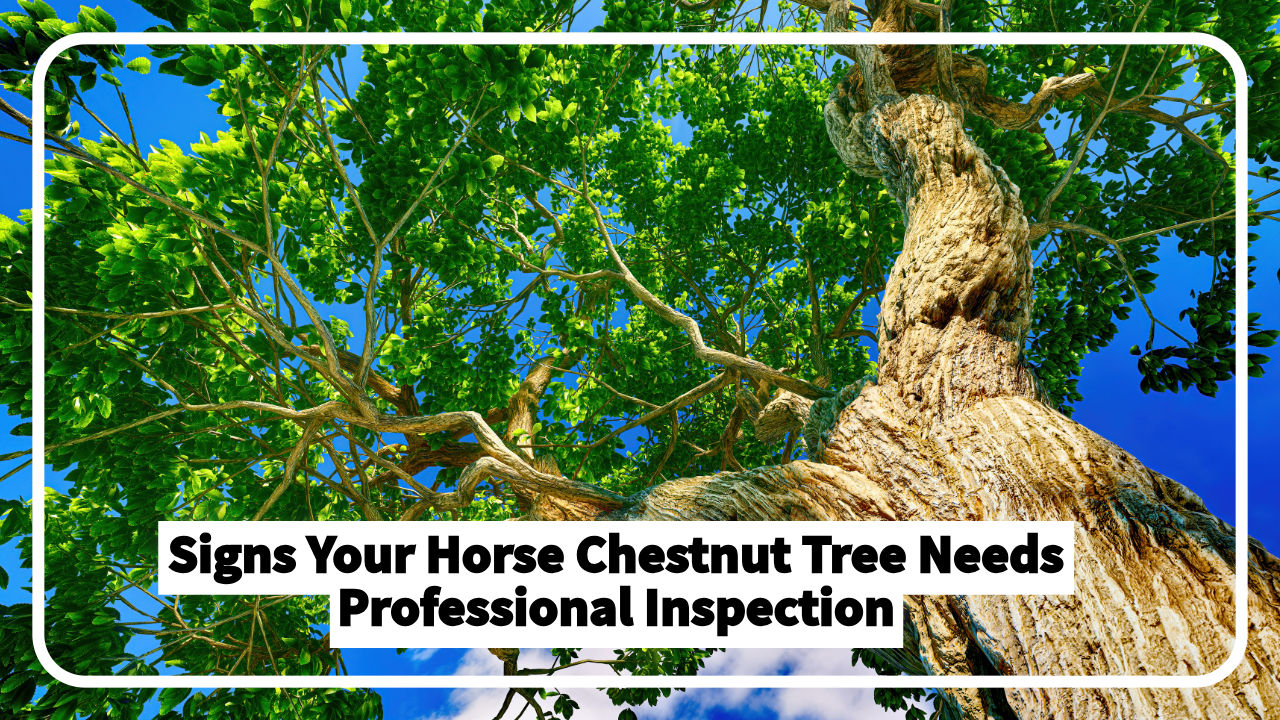
Horse Chestnut trees are impressive, long-lived trees that can become a major feature of a garden or property. Their broad canopies provide shade, while their spring flowers and autumn conkers make them a familiar part of the UK landscape.
But a large tree can sometimes look perfectly healthy from the ground while developing problems that need closer attention.
So how do you know when your Horse Chestnut needs a professional inspection?
The important thing is to look for changes in the tree’s branches, trunk, leaves, roots and overall stability.
Here are the key warning signs homeowners should know.
1. Large Dead Branches in the Canopy
Deadwood is common in mature trees, but large or increasing amounts of deadwood deserve attention.
Look for:
Large branches without leaves
Brittle branches
Dead sections of the canopy
Branches that have lost their bark
Dead limbs hanging above paths, driveways or buildings
A few small dead twigs aren’t necessarily a major concern. However, large dead branches can become a falling hazard.
An arborist can determine whether the deadwood should be removed and whether it indicates a wider health problem.
2. Cracks or Splits in the Trunk
The trunk provides the main structural support for the tree.
Fresh or significant cracks can therefore be a serious warning sign.
Pay particular attention to:
Long vertical cracks
Splits around major branch unions
Freshly exposed wood
Large areas of damaged bark
Cracks that appear to be getting larger
Not every crack means the tree is unsafe, but significant cracks should be assessed rather than ignored.
3. Signs of Bleeding Canker
Horse Chestnuts can be affected by Bleeding Canker, a condition that can damage the bark and underlying tissues.
One of the most recognisable symptoms is dark reddish-brown or almost black fluid appearing on the trunk or branches.
You may also notice:
Cracked bark
Areas of dead bark
Branch dieback
A gradual decline in the canopy
Bleeding from a Horse Chestnut does not automatically mean the tree needs to be removed, but it is a good reason to arrange professional inspection.
4. The Tree Has Started Leaning
Some trees naturally grow at an angle, so a slight lean isn’t necessarily a problem.
A new or worsening lean, however, deserves attention.
Check around the base for:
Lifted soil
Exposed roots
Cracks in the ground
Changes in the tree’s position
A sudden lean can indicate root movement or structural instability.
This is particularly important if the tree is close to a house, road, driveway or area regularly used by people.
5. Fungal Growth Around the Base
Mushrooms or other fungal growth around the base of a Horse Chestnut can sometimes indicate decay.
This doesn’t necessarily mean the tree is dangerous.
However, certain fungi can be associated with decay in the roots or lower trunk, which can affect stability.
If you notice unusual fungal growth, especially alongside:
Cavities
Soft or decaying wood
Dead branches
Reduced growth
Changes in stability
professional assessment is advisable.
6. Large Cavities or Areas of Decay
Older Horse Chestnuts can develop cavities as they age.
Some cavities can exist for many years without causing immediate problems.
The concern is whether decay is affecting important structural parts of the tree.
Look for:
Large holes in the trunk
Soft wood
Areas where bark has fallen away
Fungal growth
Cracks around cavities
An arborist can assess the extent and location of the decay and determine whether the tree can be safely retained.
7. Sudden or Significant Branch Dieback
A Horse Chestnut losing a few small branches isn’t unusual.
However, if large sections of the canopy suddenly begin dying back, investigate the cause.
Possible reasons include:
Disease
Root problems
Drought stress
Physical damage
Storm damage
A professional inspection can help distinguish between temporary stress and serious decline.
8. Leaves Are Turning Brown Too Early
Horse Chestnut leaves can naturally change colour in autumn.
The concern is when they turn brown or drop much earlier than expected.
This can be associated with issues such as:
Horse Chestnut Leaf Miner
Leaf Blotch
Drought stress
Other environmental problems
Leaf damage doesn’t necessarily mean the tree is structurally unsafe.
For example, Leaf Miner can make the canopy look badly damaged without necessarily causing the same structural risks as decay or trunk damage.
However, repeated or severe symptoms are worth investigating.
9. Major Branches Have Weak or Unusual Attachments
Look closely at where major branches join the trunk.
Warning signs can include:
Narrow or weak-looking branch unions
Included bark
Cracks around branch junctions
Large branches growing at unusual angles
Previous poorly executed pruning cuts
These areas can become vulnerable during high winds.
A professional arborist can assess the structure and recommend appropriate pruning or monitoring.
10. Storm Damage Has Changed the Tree
Horse Chestnuts have large, heavy canopies that can be affected by severe weather.
After a storm, check for:
Broken limbs
Hanging branches
Split stems
Fresh trunk cracks
Root movement
Changes in the tree’s lean
Don’t assume that a tree is safe simply because it is still standing.
Some storm damage may not be obvious from ground level.
11. The Tree Is Growing Very Close to Your Property
A mature Horse Chestnut can become extremely large.
If it’s growing close to:
Your house
Garage
Conservatory
Boundary wall
Road
Public footpath
regular professional assessment can be sensible.
This doesn’t mean the tree needs to be removed.
An arborist may recommend a maintenance programme involving appropriate pruning and periodic inspections.
12. Roots Are Becoming Exposed or the Ground Is Moving
The root system provides the tree’s stability.
Look for:
Newly exposed roots
Cracked soil
Soil lifting around the base
Root damage
Changes in ground level
These signs can be particularly concerning after storms or construction work near the tree.
If you notice significant movement around the base, keep people away from the area and arrange professional advice.
13. Previous Tree Work Looks Excessive
Poor pruning can create problems that don’t become obvious immediately.
Warning signs include:
Large stubs where branches were cut
Excessive removal of the canopy
Large wounds
Multiple weak shoots growing from old cuts
An unusually unbalanced crown
Aggressive pruning can affect both the appearance and structural development of a mature tree.
If you’re concerned about previous work, an arborist can assess the tree and recommend how it should be managed going forward.
Does Every Warning Sign Mean the Tree Needs Removing?
No.
This is an important distinction.
A tree can have:
Deadwood
Disease
Cavities
Storm damage
Leaf problems
and still be suitable for retention.
Depending on the circumstances, an arborist may recommend:
Deadwood removal
Crown reduction
Selective pruning
Monitoring
Further investigation
Management of a disease
Removal of a specific hazardous branch
Complete removal should generally be considered when the tree cannot reasonably be retained safely.
Why Professional Inspection Matters
A homeowner can identify warning signs, but determining the actual level of risk is different.
An arborist can assess:
Tree health
Structural condition
Branch attachments
Root stability
Disease and decay
Surrounding targets such as buildings and paths
This is particularly important for large Horse Chestnuts because a failed branch or tree can cause significant damage.
The goal isn’t to remove every tree that looks imperfect.
It’s to understand the actual risk and the appropriate way to manage it.
How Arbsolve Can Help
If you’re concerned about a Horse Chestnut tree, Arbsolve gives you two ways to find a verified arborist.
Option 1: Browse the Arborist Directory
You can search the Arbsolve directory for arborists in your area.
Review the available professionals and contact an arborist directly about an inspection or tree work.
Option 2: Post Your Tree Inspection Requirement
If you’re not sure which arborist to contact, you can post your job on Arbsolve.
Include:
Photos of the whole tree
Close-ups of cracks, deadwood or other concerns
Information about the tree’s location
A description of what you’ve noticed
Your postcode
Arbsolve shares your job with multiple arborists in the relevant area.
Your contact details and exact address are not shared at this stage.
Interested arborists can review the request and submit a request to quote.
You can then choose the most suitable professional based on your preferences.
Only after you accept an arborist’s request to quote are your contact details shared with that arborist, allowing you both to connect directly.
Final Thought: Don’t Wait for a Dangerous Tree to Become an Emergency
Horse Chestnuts can live for many years, but their size means that structural problems shouldn’t be ignored.
If you notice:
Large dead branches
Trunk cracks
Bleeding bark
Fungal growth
Sudden leaning
Significant dieback
Storm damage
it’s worth getting professional advice.
An inspection doesn’t automatically mean tree removal.
In many cases, early intervention can mean careful pruning, monitoring or ongoing management instead of emergency work.
The best time to identify a tree problem is before a branch ends up on your roof, driveway or neighbour’s garden.
Need Tree Work Done?
Get matched with vetted local arborists — free, no obligation.