Is Your Horse Chestnut Tree Safe After a Storm?
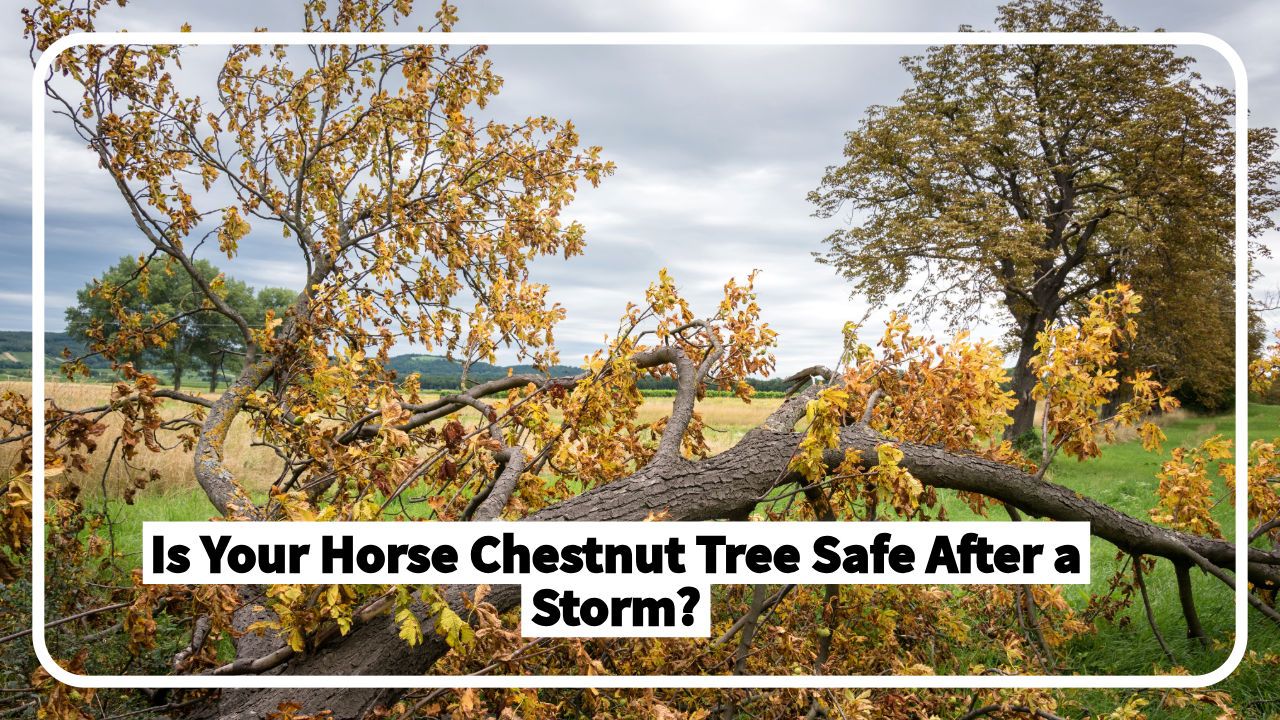
Horse Chestnut trees are impressive, but their size also means that storm damage can become a serious concern.
A mature Horse Chestnut can have a large canopy and heavy branches. After strong winds, homeowners may notice broken limbs, hanging branches, cracks, or changes around the base of the tree.
The important question is:
How do you know whether your Horse Chestnut is still safe after a storm?
The safest approach is to inspect the tree from the ground, avoid putting yourself underneath damaged branches, and get professional advice if there are signs of structural damage.
The RHS specifically recommends checking trees after high winds, with professional inspection advisable where there are safety concerns or the tree is in a high-risk location.
1. Look for Broken or Hanging Branches
The first thing to check is the canopy.
Look for:
Broken branches
Branches hanging loosely
Large limbs caught in other branches
Freshly exposed wood
Branches resting on roofs, fences, or other trees
A branch that is still attached but has partially broken can be particularly dangerous because it may fall later.
Don’t try to pull down or cut a large hanging branch yourself.
Even branches that look manageable from the ground can be extremely heavy and unpredictable.
2. Check for Cracks or Splits
Strong winds can put considerable pressure on large branches and their attachment points.
Look for:
Fresh cracks in major branches
Splits where branches meet the trunk
Cracks running down the trunk
Newly exposed wood
Large sections of damaged bark
A small surface mark isn’t necessarily a sign of serious structural damage.
However, a large crack in a major branch or the main trunk deserves professional attention.
3. Has the Tree Started Leaning?
A slight natural lean isn’t necessarily a problem.
What’s more concerning is a new or worsening lean after the storm.
Look around the base for:
Lifted soil
Exposed roots
Cracks in the ground
Soil movement
A change in the tree’s position
These can indicate that the root system has been disturbed.
A tree can remain standing after a storm while still having compromised stability.
4. Check the Base of the Tree
The base is one of the most important areas to inspect.
Look for:
Soil lifting on one side
Newly exposed roots
Broken roots
Cracks around the root area
Changes in the tree’s position
If you see significant movement around the base, keep people and vehicles away from the area and arrange a professional assessment.
5. Look for Damage to the Trunk
The trunk carries the weight of the entire canopy, so serious trunk damage shouldn’t be ignored.
Check for:
Splits
Large cracks
Missing sections of bark
Fresh wounds
Cavities that have been exposed by the storm
A damaged trunk doesn’t automatically mean the tree needs to be removed.
An experienced arborist can assess whether the damage can be managed safely.
6. Check for Branches Resting on Your House or Other Property
Storm-damaged Horse Chestnuts can create immediate risks when branches fall towards:
Roofs
Conservatories
Garages
Fences
Driveways
Cars
Neighbouring gardens
If a large branch has landed on a structure, don’t start cutting it yourself.
The weight and tension in a fallen branch can change when it’s cut, causing it to move unexpectedly.
A professional tree surgeon has the equipment and experience to dismantle damaged branches safely.
7. Don’t Assume the Tree Is Safe Because It Is Still Standing
This is an important point.
A tree doesn’t have to fall over to be dangerous.
Storms can create:
Cracked branches
Weak branch attachments
Root damage
Splits in the trunk
Hidden structural defects
Some damage may not be obvious from ground level.
The RHS notes that physical threats from trees include falling limbs and structural failure of the trunk, and recommends professional surveys for substantial trees near buildings or public highways.
8. Don’t Immediately Remove the Tree
Seeing a broken branch can make homeowners think:
“The whole tree needs to come down.”
Not necessarily.
Depending on the damage, an arborist may recommend:
Removing damaged branches
Reducing part of the canopy
Removing specific high-risk limbs
Monitoring the tree
Retaining the tree with appropriate management
The aim should be to manage the risk while preserving the tree where reasonably possible.
Trees with defects can sometimes be managed through targeted pruning rather than complete removal.
9. When Is Emergency Tree Removal Necessary?
Emergency removal may be appropriate when a tree has become an immediate and unacceptable risk.
Examples include:
The tree is partially uprooted
The trunk has suffered a major split
A large section is hanging over a building
Major roots have lifted from the ground
The tree is at serious risk of falling
A damaged tree is blocking a road or access route
In these situations, don’t wait for the next storm to find out what happens.
Keep people away from the area and contact a professional tree surgeon.
10. What If the Tree Is Near a Public Road?
Extra caution is needed if your Horse Chestnut is next to:
A pavement
Road
Public footpath
Shared access
Parking area
The consequences of a falling branch can be much more serious in these locations.
If there’s a genuine safety concern, arrange professional assessment as soon as possible.
What About Insurance After Storm Damage?
If a storm has caused damage to your house, garage, fence, or another insured structure, contact your insurer and check your policy before arranging non-emergency work.
The RHS notes that damage to houses caused by falling trees and branches is generally covered by many home insurance policies, but homeowners should check their individual policy wording and exclusions.
It can also be useful to:
Take photographs of the damage
Record when the storm occurred
Keep arborist reports and quotations
Keep invoices for emergency work
Good documentation can help when discussing the damage with an insurer.
What About a Protected Horse Chestnut?
Before carrying out routine pruning or removal, check whether the tree is protected by a Tree Preservation Order (TPO) or is located within a Conservation Area.
Emergency situations can have specific exceptions, but the rules can be complicated. The RHS recommends contacting the local planning authority where urgent work is required on a protected tree.
Don’t assume that storm damage automatically means you can remove a protected tree without any notification or evidence.
Photographs and professional assessment can be particularly useful.
How Arbsolve Can Help After a Storm
If your Horse Chestnut has suffered storm damage, finding the right professional quickly can be difficult.
Arbsolve gives homeowners two ways to find an arborist.
Option 1: Browse the Arborist Directory
You can search the Arbsolve directory for arborists in your area and contact them directly.
This is useful when you want to choose a particular professional yourself.
Option 2: Post Your Storm Damage Requirement
Alternatively, you can post your tree work requirement on Arbsolve.
Include:
Photos of the whole tree
Photos of broken or damaged branches
Photos of the trunk and base
A description of what happened
Your postcode
Any immediate safety concerns
Arbsolve shares the job with multiple arborists in the relevant area.
Your contact details and exact address are not shared at this stage.
Interested arborists can review the job and request the opportunity to quote.
You then choose the arborist you want to work with based on your preferences.
Only after you accept a particular arborist’s request to quote are your contact details shared with that arborist, allowing you both to connect directly.
This can be particularly useful after storms, when homeowners may need professional help quickly without having to contact numerous companies individually.
What Should You Do Immediately After a Storm?
If you have a large Horse Chestnut in your garden, follow this simple checklist:
1. Stay away from obviously damaged areas.
2. Look from a safe distance for hanging branches or major splits.
3. Check whether the tree has changed position or started leaning.
4. Look for significant soil movement around the base.
5. Photograph the damage where it is safe to do so.
6. Keep children, pets, and visitors away from the affected area.
7. Contact an arborist if there are significant concerns.
8. Contact your insurer if the storm has damaged insured property.
Don’t climb the tree or attempt to remove large branches yourself.
Final Thought: Don’t Wait for the Next Storm
A Horse Chestnut that survives a storm isn’t necessarily unaffected.
Some damage is obvious. Other structural problems may only become apparent later.
If you notice broken limbs, fresh cracks, root movement, or a change in the tree’s position, professional assessment is the safest approach.
And remember, storm damage doesn’t automatically mean the tree has to be removed.
A qualified arborist can determine whether targeted pruning, monitoring, or removal is the appropriate solution.
The goal isn’t simply to cut down a damaged tree.
It’s to make the situation safe while preserving the tree whenever it can reasonably be retained.
Need Tree Work Done?
Get matched with vetted local arborists — free, no obligation.