When Should a Rowan Tree Be Pruned?
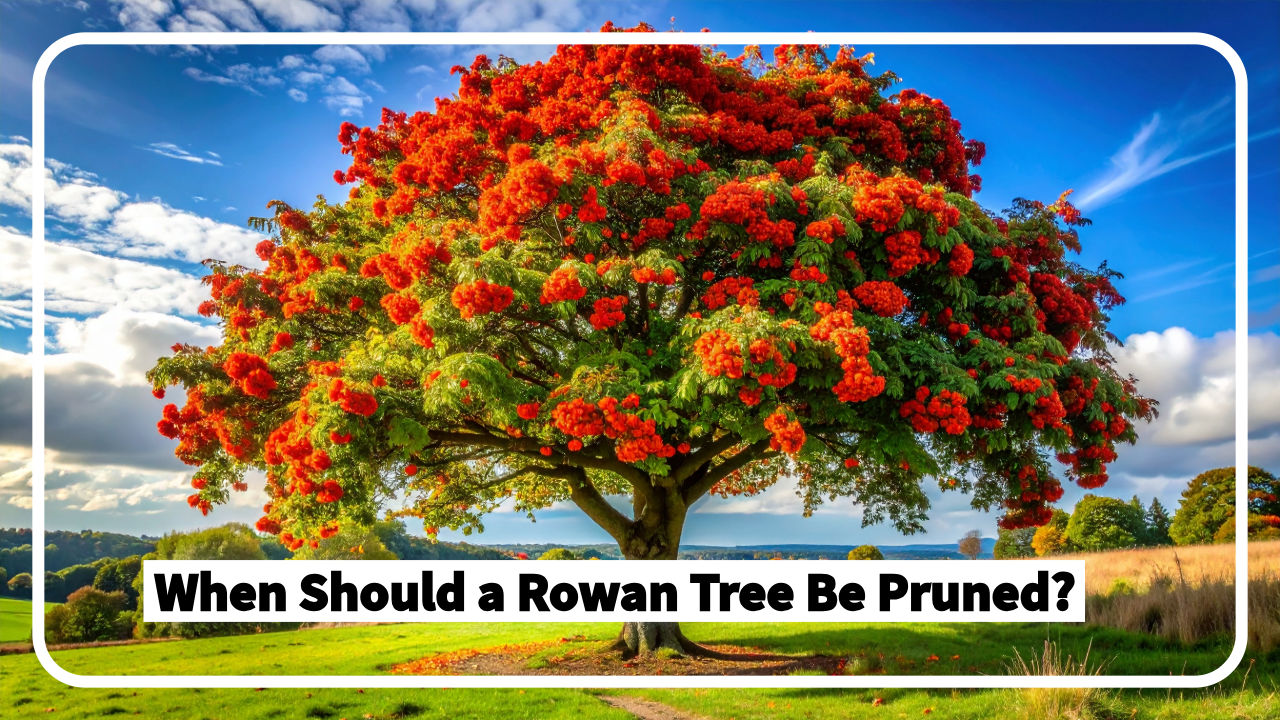
Rowan trees (also known as Mountain Ash trees) are a popular choice in UK gardens thanks to their attractive berries, seasonal colour, and relatively compact size.
They’re generally considered low-maintenance trees, but like any tree, they occasionally need pruning to stay healthy, safe, and looking their best.
One of the most common questions homeowners ask is:
When is the best time to prune a Rowan tree?
The short answer is:
Most Rowan trees should be pruned during late autumn or winter when the tree is dormant.
However, the right timing depends on the reason for pruning and the condition of the tree.
Why Prune a Rowan Tree?
Pruning isn’t just about appearance.
A well-pruned Rowan tree can:
Maintain a balanced shape
Remove dead or damaged branches
Improve airflow through the canopy
Reduce the risk of branch failure
Prevent branches from interfering with buildings or pathways
Encourage healthy growth
In many cases, Rowan trees require only light maintenance throughout their lifetime.
The Best Time to Prune a Rowan Tree
For most pruning work, the ideal time is:
Late Autumn to Late Winter
This is generally between:
November and February
During this period:
The tree is dormant
There are no leaves obscuring the structure
The tree experiences less stress
It is easier to identify dead, damaged, or crossing branches
Many arborists prefer carrying out structural pruning during this dormant season.
Can You Prune a Rowan Tree in Summer?
Yes, but only in certain situations.
Light pruning may be appropriate if:
A branch has become damaged
A branch poses a safety risk
Deadwood needs removing
However, heavy pruning during active growth is generally avoided because it can:
Stress the tree
Reduce berry production
Encourage excessive regrowth
If summer pruning is required, it should usually be limited and carefully planned.
How Much Should You Prune?
One of the biggest mistakes homeowners make is removing too much at once.
As a general rule:
Remove dead, damaged, or diseased branches first
Avoid removing large amounts of healthy growth
Maintain the natural shape of the tree
Rowan trees naturally develop an attractive form and rarely require aggressive pruning.
In most cases, less is more.
As a general arboricultural rule of thumb, you should avoid removing more than 20–25% of a tree's live crown in a single growing season. Removing more than this can significantly stress the tree, reduce energy production, and increase the risk of decline, epicormic growth, decay, or disease.
For a Rowan (Mountain Ash), I'd be even more conservative:
10–15% reduction – ideal for routine maintenance and shaping.
15–20% reduction – generally acceptable on a healthy, vigorous tree if carried out correctly.
25%+ reduction – only where there is a specific management reason and the tree is in good health.
30%+ reduction – I would rarely recommend on a Rowan unless there are exceptional circumstances.
Common Reasons to Prune a Rowan Tree
Deadwood Removal
Dead branches should be removed whenever they are identified.
Benefits include:
Improved safety
Reduced risk of falling branches
Better overall appearance
Removing Damaged Branches
Storms, heavy snow, and strong winds can occasionally damage Rowan trees.
Damaged limbs should be assessed and removed if necessary.
Improving Clearance
Pruning may be needed if branches are:
Touching buildings
Blocking pathways
Growing over driveways
Interfering with neighbouring properties
Correcting Shape
Occasionally, a Rowan tree may develop:
Crossing branches
Unbalanced growth
Crowded areas within the canopy
Selective pruning can improve structure without significantly altering the tree.
What Should You Avoid?
Rowan trees generally respond poorly to harsh pruning.
Avoid:
Heavy topping
Severe lopping
Removing large sections of the canopy
Cutting back all growth at once
These practices can:
Damage tree health
Create weak regrowth
Ruin the natural appearance of the tree
A Rowan tree should look like a Rowan tree after pruning—not a drastically altered version of one.
Do Rowan Trees Need Regular Pruning?
Not usually.
Compared with some larger species, Rowan trees are relatively low-maintenance.
Many healthy Rowan trees may only need:
Occasional deadwood removal
Light shaping
Periodic inspections
If the tree is healthy and well-positioned, extensive pruning is often unnecessary.
What If Your Rowan Tree Is Becoming Too Large?
While Rowan trees are generally smaller than many garden trees, they can still outgrow some spaces.
If size becomes a concern, an arborist may recommend:
Crown thinning
Selective reduction
Structural pruning
The goal is usually to manage growth while maintaining the tree’s natural character.
What About Bird Nesting Season?
Rowan trees are popular with birds because of their berries and dense branching structure.
Before carrying out pruning during spring or summer, it’s important to check for active nests.
If birds are nesting, work may need to be postponed until the nest is no longer active.
Protecting nesting birds is both good practice and a legal consideration in the UK.
How Arbsolve Can Help
If you’re unsure whether your Rowan tree needs pruning, Arbsolve can help you connect with verified arborists.
You can:
Browse Local Arborists
Search the directory and contact arborists directly.
Post Your Tree Pruning Requirement
Upload photos and describe your concerns.
Local arborists can review the information and advise:
Whether pruning is needed
The best time to carry out the work
The most appropriate pruning method
This makes it easier to get professional advice before making cuts that could affect the health of the tree.
Final Thought
Rowan trees are beautiful, resilient trees that generally require very little intervention.
When pruning is needed, the best time is usually during the dormant season between late autumn and winter.
The key is to focus on:
Removing dead or damaged growth
Maintaining natural shape
Avoiding excessive pruning
A little careful maintenance can help keep a Rowan tree healthy, attractive, and productive for many years.
Need Tree Work Done?
Get matched with vetted local arborists — free, no obligation.