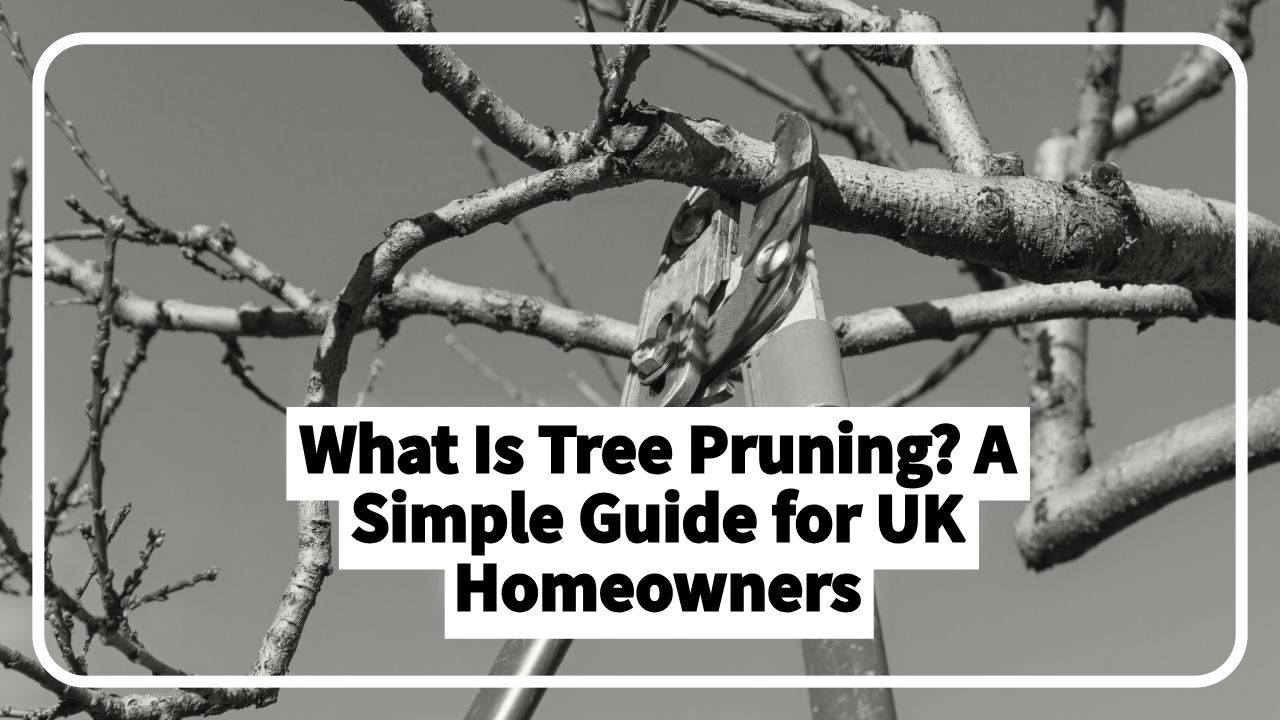
What Is Tree Pruning? A Simple Guide for UK Homeowners
Tree pruning is one of the most important parts of tree care — but it’s also one of the most misunderstood.
Many homeowners think pruning just means cutting branches to make a tree look tidy.
In reality, proper tree pruning is about improving tree health, reducing risk, and managing growth safely — especially when trees are close to homes, gardens, and neighbouring properties.
What Is Tree Pruning?
Tree pruning is the selective removal of specific branches to improve a tree’s:
Health
Structure
Safety
Appearance
It’s not random cutting.
Each cut is made for a reason — whether that’s removing a dangerous branch, improving balance, or allowing more light into your garden.
Why Tree Pruning Is Important
Well-pruned trees are:
Safer
Healthier
More stable in storms
Better shaped
Longer lasting
Poorly maintained trees, on the other hand, can develop:
Weak or heavy branches
Imbalanced growth
Increased risk of breakage
Reduced sunlight in your garden
In many cases, homeowners only realise the need for pruning when branches start:
Hanging over gardens
Blocking light
Getting too close to roofs or structures
Pruning addresses these issues before they become bigger problems.
Types of Tree Pruning (Explained Simply)
Not all pruning is the same. Here are the most common types explained in plain terms:
1. Crown Thinning
This involves removing some smaller branches inside the tree canopy.
Why it’s done:
Lets more light through
Reduces wind resistance
Lowers the chance of storm damage
2. Crown Reduction
This reduces the overall size of the tree while keeping its natural shape.
Why it’s done:
Stops trees getting too large
Keeps them clear of buildings
Reduces weight on heavy branches
3. Crown Lifting
This removes the lower branches of a tree.
Why it’s done:
Creates space underneath
Improves access for walkways or driveways
Keeps branches away from structures
4. Deadwood Removal
This removes branches that are no longer alive.
Why it’s done:
Prevents falling branches
Improves safety
Keeps the tree healthy
Dead branches are often dry and fragile, meaning they can break suddenly and become dangerous.
When Should You Prune a Tree?
The best time depends on the type of tree and the reason for pruning.
In general:
Late winter or early spring is ideal for most trees
Dead or dangerous branches should be removed immediately
Light maintenance can be done throughout the year
A professional can advise on the best timing for your specific tree.
Why Tree Pruning Should Be Done Properly
Tree pruning might seem simple, but poor technique can cause serious problems.
Common mistakes include:
Cutting too much at once
Removing the wrong branches
Leaving large wounds
Creating imbalance in the tree
This can lead to:
Weak regrowth
Increased risk of failure
Long-term damage to the tree
Proper pruning focuses on:
Maintaining balance
Supporting healthy growth
Reducing risk
Done correctly, pruning helps the tree thrive.
Safety and Risk Considerations
Pruning often involves:
Working at height
Handling heavy branches
Using cutting equipment
This becomes more complex when trees are:
Close to buildings
Overhanging neighbouring gardens
Large or awkwardly positioned
In these situations, pruning is not just about cutting — it’s about controlling how branches are removed safely.
Legal Considerations in the UK
Before pruning, it’s important to check whether the tree is protected.
You may need permission if:
The tree has a Tree Preservation Order (TPO)
You live in a conservation area
Even minor work like pruning can require approval in these cases.
A qualified tree surgeon will check this before starting work.
DIY vs Professional Tree Pruning
Small, low branches can sometimes be handled safely by homeowners.
However, larger or higher branches should be handled by professionals.
Why?
Because proper pruning involves:
Understanding tree structure
Making correct cuts
Managing falling branches
Using specialist equipment
Professional tree surgeons ensure the work is:
Safe
Controlled
Clean and tidy
Beneficial for the tree
Signs Your Tree Needs Pruning
You may need pruning if you notice:
Branches hanging over your garden
Reduced sunlight in your space
Dead or broken branches
Trees growing too close to buildings
Uneven or heavy-looking growth
Addressing these early prevents bigger issues later.
Final Thought: Pruning Is About Prevention, Not Just Appearance
Tree pruning is not just about making a tree look better.
It’s about:
Keeping your property safe
Maintaining tree health
Preventing future problems
Managing growth responsibly
When done properly, pruning extends the life of your tree and reduces the risk of damage.
And in most cases, it’s far easier — and more cost-effective — to maintain a tree than to deal with problems later.
Need Tree Work Done?
Get matched with vetted local arborists — free, no obligation.