What Is Tree Crown Reduction? (UK Homeowner Guide)
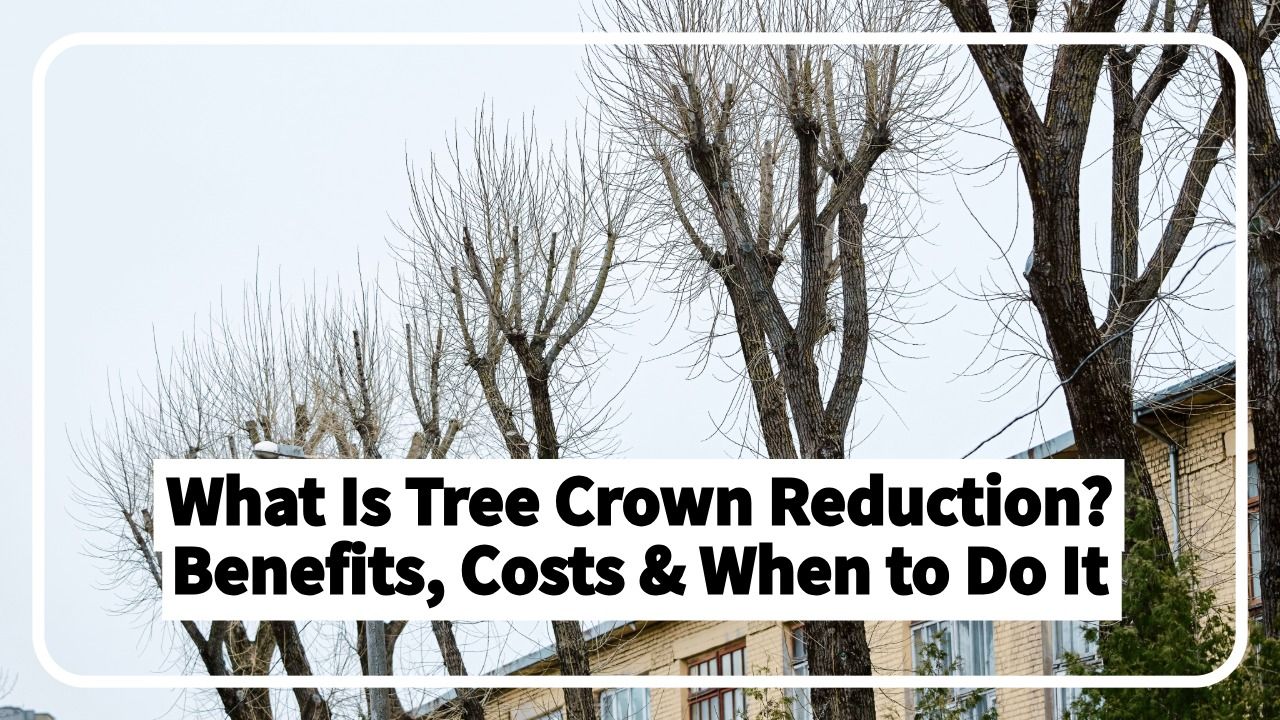
If a tree in your garden is getting too large, blocking light, or growing too close to your house, you may be advised to consider crown reduction.
But what does that actually mean?
In simple terms:
Tree crown reduction is a careful way of making a tree smaller while keeping it healthy and natural-looking.
It’s one of the most common — and most misunderstood — types of tree work in the UK.
What Is Tree Crown Reduction?
The “crown” of a tree is the top part made up of branches and leaves.
Crown reduction involves:
Shortening selected branches
Reducing the overall height and spread
Keeping the tree’s natural shape
Instead of cutting randomly, a professional will:
Choose specific branches to shorten
Cut back to strong, healthy growth points
Maintain balance across the tree
The goal is to reduce size without harming the tree.
Why Would You Need Crown Reduction?
Crown reduction is usually recommended when a tree has outgrown its space or is starting to cause issues.
Common reasons include:
1. Trees Getting Too Large
Trees can become too big for their surroundings, especially in urban gardens.
2. Blocking Light
Large trees can stop sunlight reaching your garden or home.
This is a common concern in smaller UK gardens where light is limited.
3. Branches Near Buildings
Branches growing close to roofs, windows, or walls can become a risk.
4. Reducing Weight and Stress
Heavy branches can put strain on the tree structure, especially in windy conditions.
Reducing weight helps lower the risk of breakage.
5. Managing Tree Shape
Some trees grow unevenly or become unbalanced over time.
Crown reduction helps restore a safer, more stable structure.
Crown Reduction vs “Lopping” (Important Difference)
Many people use the term “lopping” when they actually mean crown reduction.
They are not the same.
Crown reduction = careful, controlled pruning
Lopping = rough, unplanned cutting
Crown reduction:
Maintains the tree’s health
Keeps a natural shape
Reduces risk safely
Lopping often:
Damages the tree
Leads to weak regrowth
Creates long-term problems
If you’re speaking to a professional, ask for crown reduction, not lopping.
How Much Can a Tree Be Reduced?
This depends on the species, size, and condition of the tree.
In general:
Reductions are usually between 10% and 30% of the crown
Removing too much can stress or damage the tree
A professional will assess how much reduction is safe.
The aim is always to:
Keep the tree healthy
Maintain structural integrity
Avoid over-pruning
When Is the Best Time for Crown Reduction?
Timing depends on the type of tree, but generally:
Late winter or early spring is ideal for many species
Work can also be done outside these periods if necessary
Dead or dangerous branches should be dealt with immediately
A qualified tree surgeon will advise on the best timing.
Is Crown Reduction Safe?
Yes — when done properly.
However, crown reduction involves:
Working at height
Managing heavy branches
Controlling how branches are removed
This becomes more complex when trees are:
Close to buildings
Overhanging neighbouring gardens
Large or awkwardly positioned
That’s why proper planning and technique are essential.
Legal Considerations in the UK
Before carrying out crown reduction, it’s important to check:
Tree Preservation Orders (TPOs)
Conservation area restrictions
Even pruning work may require permission in these cases.
A professional tree surgeon will handle these checks for you.
DIY vs Professional Crown Reduction
Crown reduction is not suitable for DIY work on larger trees.
It requires:
Knowledge of tree structure
Correct pruning techniques
Safe working practices
Specialist equipment
Incorrect cutting can:
Damage the tree
Create imbalance
Increase the risk of failure
Professional tree surgeons ensure the work is:
Safe
Controlled
Beneficial for the tree
Signs Your Tree May Need Crown Reduction
You may need crown reduction if:
The tree is blocking too much light
Branches are close to your house
The tree looks too large for the space
The canopy feels heavy or unbalanced
There are concerns about storm safety
Addressing these early can prevent bigger problems later.
Final Thought: Crown Reduction Is About Control, Not Cutting
Crown reduction isn’t about cutting a tree down.
It’s about managing size, reducing risk, and maintaining health.
Done properly, it:
Keeps your tree safe
Improves light in your garden
Reduces pressure on the structure
Extends the life of the tree
Done poorly, it can cause long-term damage.
So if your tree is becoming too large or problematic, the right approach is simple:
Reduce it carefully — not aggressively.
Need Tree Work Done?
Get matched with vetted local arborists — free, no obligation.