How to Prune Holly Trees Without Affecting Growth
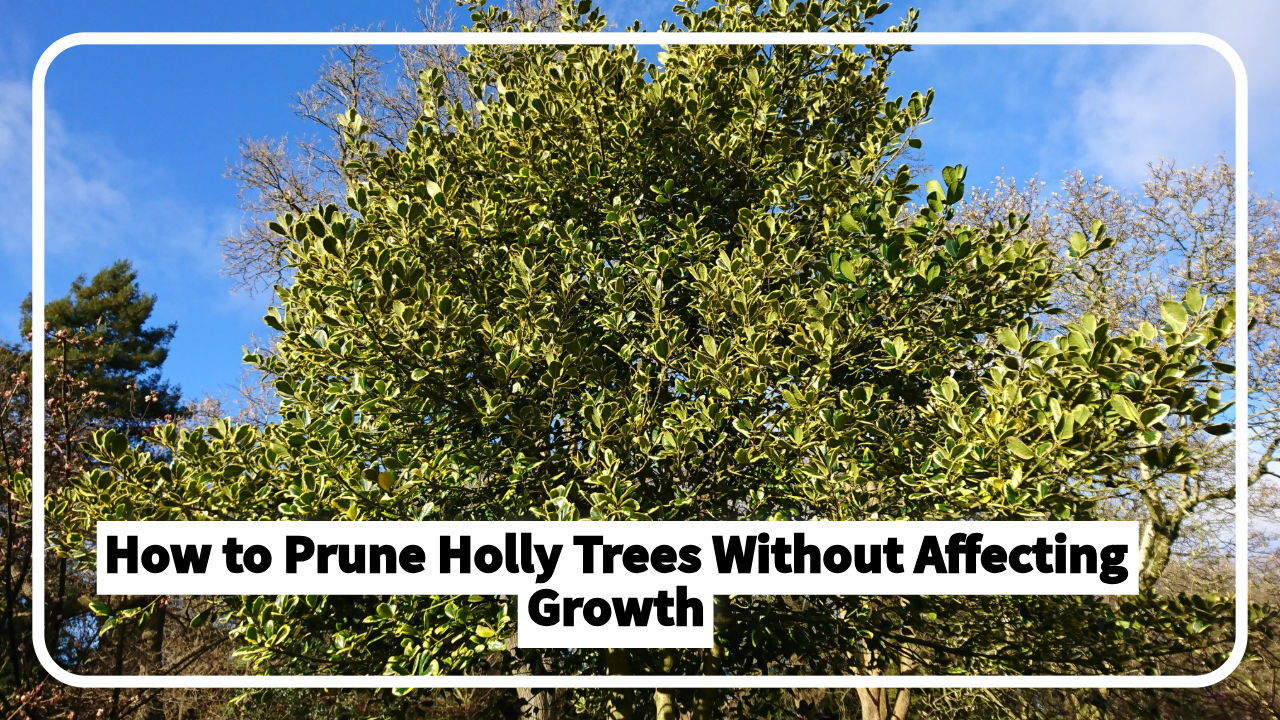
Holly trees are a popular choice in UK gardens thanks to their glossy evergreen leaves, bright red berries, and ability to provide year-round privacy.
Whether grown as a hedge, a small ornamental tree, or a larger specimen, Holly responds well to pruning—provided it’s done correctly.
Many homeowners worry that pruning will damage the tree or stop it growing properly.
The good news is that when carried out at the right time and in the right way, pruning actually encourages healthy growth and helps keep your Holly looking its best.
Here’s how to prune a Holly tree without affecting its long-term health.
Why Should You Prune a Holly Tree?
Pruning isn’t just about keeping a Holly tree tidy.
It also helps to:
Remove dead or damaged branches
Maintain a balanced shape
Encourage healthy new growth
Improve airflow through the canopy
Prevent branches from rubbing against each other
Keep paths, driveways, and buildings clear
Regular light pruning is usually far better than leaving the tree for years and then cutting it back heavily.
When Is the Best Time to Prune a Holly Tree?
For most Holly trees, the best time to prune is:
Late winter to early spring (February to March), before new growth begins.
At this time:
The tree is still dormant
It’s easier to see the branch structure
New growth can quickly cover pruning cuts
Light trimming can also be carried out during summer to maintain shape if needed.
Consider Birds Before Pruning
Holly trees provide excellent shelter for birds, particularly during spring and summer.
Before starting any pruning, check carefully for:
Active nests
Birds regularly flying into the same part of the tree
Nesting material hidden within the branches
If birds are nesting, it’s usually best to delay pruning until the young have left the nest.
Planning routine pruning outside the main bird nesting season can help avoid delays.
Start by Removing Dead, Damaged and Diseased Branches
The first step is always to remove branches that are:
Dead
Broken
Diseased
Rubbing against other branches
This improves both the appearance and health of the tree.
Removing damaged branches also reduces the risk of disease spreading to healthy growth.
Don’t Remove Too Much at Once
One of the most common mistakes is over-pruning.
Although Holly trees are relatively resilient, removing too much foliage in one go can stress the tree.
As a general guide:
Focus on selective pruning rather than heavy cutting.
Spread larger pruning jobs over more than one season if significant size reduction is needed.
Keep as much healthy foliage as possible.
Gradual pruning allows the tree to recover naturally while continuing to produce strong new growth.
Preserve the Natural Shape
Holly trees naturally develop an attractive, dense structure.
When pruning:
Step back regularly to check the overall shape.
Remove individual branches rather than cutting everything to the same height.
Aim for a balanced, natural appearance.
A Holly tree should still look like a Holly tree after pruning—not an artificial shape unless that’s your intended design.
Thin Crowded Areas Carefully
If the canopy becomes very dense, selectively removing a few internal branches can:
Improve airflow
Allow more light into the centre of the tree
Reduce moisture build-up
Encourage healthier growth
Avoid removing too many inner branches at once, as dense foliage helps protect the tree throughout the year.
Avoid Topping or Severe Cutting Back
Some homeowners try to reduce the height of a Holly tree by cutting the top off.
This is rarely the best approach.
Severe cutting can lead to:
Poor structure
Uneven regrowth
Increased maintenance
Loss of the tree’s natural form
If your Holly has become too large, selective crown reduction carried out by a qualified arborist is usually a much better option.
Should You Prune Holly Hedges Differently?
Yes.
Holly hedges are usually trimmed more regularly than individual trees.
When maintaining a hedge:
Keep the base slightly wider than the top so sunlight reaches the lower branches.
Trim little and often rather than allowing the hedge to become overgrown.
Remove any dead or damaged sections during each trim.
This helps maintain a dense hedge from top to bottom.
Can You Prune a Holly Tree Yourself?
Small Holly trees are often suitable for DIY pruning if:
All work can be carried out safely from the ground.
Only light pruning is required.
You have suitable tools.
However, it’s safer to contact a professional arborist if:
The tree is tall.
Branches overhang buildings or roads.
Large limbs need removing.
You are unsure how much to prune.
Working at height or removing heavy branches carries significant risks.
Signs Your Holly Tree Needs Pruning
Your Holly tree may benefit from pruning if you notice:
Dead or broken branches
Dense, overcrowded growth
Branches touching buildings
Limbs blocking paths or driveways
An uneven or unbalanced shape
Regular inspections help identify these issues before they become larger problems.
How Arbsolve Can Help
If your Holly tree needs professional pruning, Arbsolve makes it easy to connect with verified arborists in your area.
There are two ways to get started.
Browse the Arborist Directory
Search for local arborists, compare their services, and contact them directly for a quote.
Post Your Tree Pruning Requirement
You can also post your job on Arbsolve.
Simply provide:
Photos of the Holly tree
Approximate height
A description of the work required
Your postcode
Arbsolve shares your request with arborists covering your area.
Interested professionals can request the opportunity to quote.
Your contact details and exact address remain private until you choose which arborist you’d like to work with.
This allows you to compare professionals before making a decision.
Final Thought
Holly trees don’t need heavy pruning to stay healthy.
In fact, regular light maintenance is usually the best approach.
By pruning at the right time, removing only what’s necessary, and preserving the tree’s natural shape, you can encourage healthy growth for years to come.
If your Holly tree has become very large, is close to buildings, or requires significant pruning, a qualified arborist can ensure the work is carried out safely while protecting the long-term health of the tree.
Need Tree Work Done?
Get matched with vetted local arborists — free, no obligation.