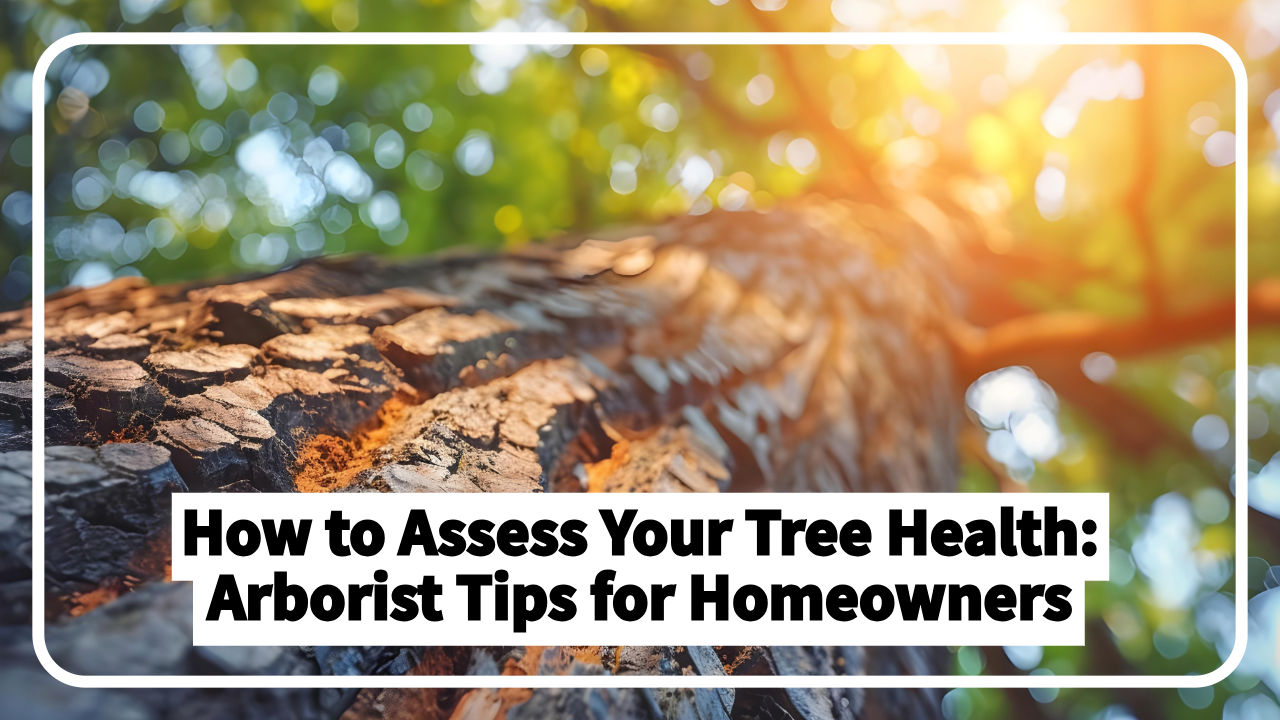
How to Assess Your Tree Health: Arborist Tips for Homeowners
Most tree problems don’t appear overnight.
In many cases, trees show warning signs months — or even years — before they become dangerous or start declining seriously.
The challenge is that many homeowners simply don’t know what to look for.
Learning how to assess basic tree health can help you:
Spot problems early
Prevent expensive damage
Reduce safety risks
Know when to call a professional arborist
This guide explains simple arborist tips to help you better understand the condition of your trees.
1. Start by Looking at the Leaves
Leaves are one of the easiest ways to assess tree health.
Healthy trees usually have:
Full, consistent leaf coverage
Strong colour during growing season
Even growth across the canopy
Warning signs include:
Bare sections during spring or summer
Smaller-than-normal leaves
Early leaf drop
Yellowing or discolouration
If large parts of the tree fail to produce leaves during the growing season, it may indicate stress, disease, or dead sections.
2. Check for Dead or Brittle Branches
Deadwood is one of the most common signs of declining tree health.
Look for branches that:
Have no leaves
Snap easily
Appear dry or cracked
Look pale or lifeless
Dead branches become brittle over time and can fall unexpectedly, especially during windy weather.
Removing deadwood early helps reduce risk and improves overall tree health.
3. Examine the Trunk Carefully
The trunk tells you a lot about the structural condition of a tree.
Check for:
Deep cracks
Splits in the bark
Areas of decay
Missing bark
Hollow sections
Small surface marks are often normal, but large cracks or cavities may indicate structural weakness.
If the trunk looks damaged or unstable, it’s worth getting professional advice.
4. Look Around the Base of the Tree
The base and root area are extremely important.
Signs of possible problems include:
Fungal growth around the roots
Soil lifting or cracking
Exposed roots
Excessive leaning
Soft or decaying wood near the base
Mushrooms or fungal growth can sometimes indicate internal decay within the root system.
5. Notice Any Sudden Leaning
Some trees naturally grow at slight angles.
However, sudden or increasing lean can indicate:
Root instability
Soil movement
Structural weakness
This becomes more concerning if:
The soil is lifting on one side
Cracks appear in the ground nearby
The lean developed after storms or heavy rain
Trees leaning toward buildings or neighbouring properties should be assessed quickly.
6. Check for Signs of Disease or Pests
Certain diseases and pest problems weaken trees gradually.
Watch for:
Black spots or unusual marks on leaves
Fungus on branches or trunk
Large sections of dead growth
Unusual holes or insect activity
Conditions such as ash dieback can severely weaken tree structure over time.
Early detection gives arborists more options for treatment or management.
7. Assess the Overall Shape and Balance
Healthy trees usually have balanced growth.
Signs of structural stress include:
One side much heavier than the other
Large overextended branches
Dense canopies creating excessive weight
Uneven growth patterns
Unbalanced trees are more vulnerable during storms and high winds.
Professional pruning can often improve stability and reduce risk.
8. Consider the Surroundings
Tree health is also affected by the environment around it.
Common stress factors include:
Construction work near roots
Soil compaction
Poor drainage
Lack of space for root growth
Repeated storm exposure
Even healthy trees can decline if the surrounding conditions change significantly.
9. Don’t Ignore Changes After Storms
Storms often reveal hidden weaknesses.
After strong winds or heavy rain, inspect for:
Newly cracked branches
Hanging limbs
Fresh leaning
Split trunks
Broken canopy sections
Even if damage seems minor, storms can weaken trees structurally.
10. Know When to Call a Professional Arborist
Homeowners can spot warning signs — but professional arborists provide detailed assessment.
A qualified arborist can:
Identify disease and decay
Assess structural stability
Recommend pruning or treatment
Determine whether removal is necessary
Check for legal restrictions such as TPOs
This is especially important for:
Large trees
Trees near buildings
Trees close to roads or neighbours
Trees showing multiple warning signs
How Arbsolve Can Help
If you’re concerned about a tree but unsure who to contact, Arbsolve helps homeowners find verified arborists locally.
You can either:
Browse arborists directly through the directory
Post your tree concern or job requirement and receive interest from local arborists
This makes it easier to connect with professionals who can properly assess your tree health and recommend the safest next steps.
Final Thought: Healthy Trees Rarely Become Dangerous Overnight
Trees usually show signs before major problems develop.
The key is noticing those warning signs early.
Regular visual checks can help you:
Prevent dangerous failures
Reduce long-term costs
Protect your property
Keep your trees healthier for longer
And if something doesn’t look right, it’s always better to get professional advice sooner rather than later.
Because when it comes to tree health:
Early assessment is far easier than emergency removal.
Need Tree Work Done?
Get matched with vetted local arborists — free, no obligation.