How Often Should Leylandii Be Trimmed?
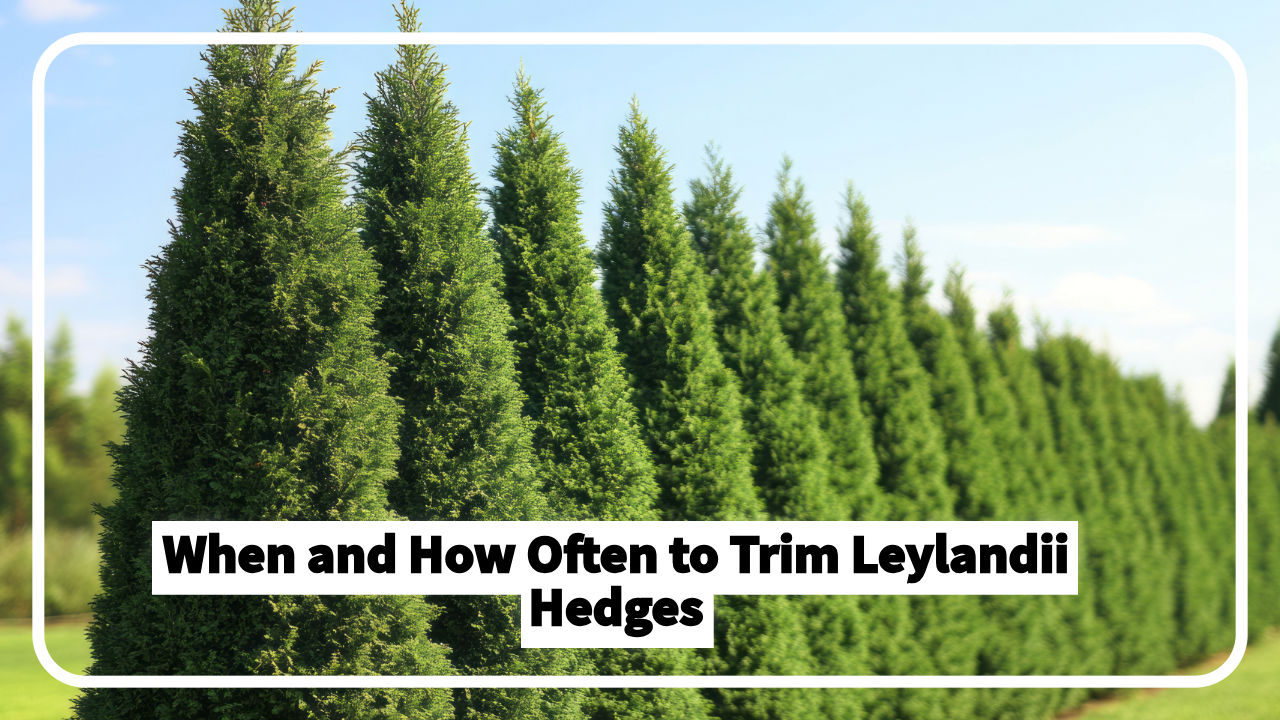
Leylandii is one of the fastest-growing hedging plants in the UK.
When properly maintained, it creates an attractive, dense screen that provides privacy, reduces noise, and acts as a windbreak. However, without regular trimming, it can quickly become overgrown and difficult to manage.
One of the most common questions homeowners ask is:
How often should Leylandii be trimmed?
The simple answer is:
Most Leylandii hedges should be trimmed once or twice a year to keep them healthy, tidy, and under control.
The exact frequency depends on the hedge’s age, growth rate, and the look you’re trying to achieve.
Why Regular Trimming Matters
Leylandii can grow up to 60–90cm (2–3 feet) each year in ideal conditions.
Without regular maintenance, a hedge can quickly become:
Too tall
Too wide
Difficult to trim safely
A source of neighbour disputes
More expensive to maintain
Regular trimming keeps the hedge at a manageable size and avoids the need for major corrective work later.
How Often Should You Trim a Leylandii Hedge?
Young Leylandii Hedges
If your hedge is still establishing itself, trimming once a year is usually enough.
Light trimming encourages:
Bushier growth
A thicker hedge
A more even shape
Avoid cutting too heavily while the hedge is still developing.
Established Leylandii Hedges
Most mature hedges benefit from trimming once or twice a year.
For homeowners who prefer a neat, formal hedge, trimming twice annually often produces the best results.
Regular maintenance prevents the hedge from becoming too large and keeps future trimming straightforward.
When Is the Best Time to Trim Leylandii?
The best time depends on how much growth you need to manage.
Generally, most homeowners trim Leylandii:
Late spring to early summer (May to June) after the first flush of growth.
Late summer (August to early September) if a second trim is needed to keep the hedge tidy before autumn.
Avoid trimming during periods of extreme heat, drought, or freezing weather, as this can put unnecessary stress on the hedge.
Avoid Trimming During Bird Nesting Season
Before trimming any hedge, check carefully for nesting birds.
Many birds choose dense Leylandii hedges as nesting sites.
If an active nest is present, work should normally be delayed until the young birds have left the nest.
Protecting active nests is important for wildlife and is a legal requirement in the UK.
What Happens If You Don’t Trim Leylandii?
Leylandii grows quickly.
Without regular trimming, it may:
Block sunlight from your garden
Become difficult to reduce
Grow into neighbouring properties
Require more expensive professional work
Lose its neat appearance
Once a Leylandii hedge becomes very overgrown, restoring it can be far more difficult than maintaining it regularly.
Can You Cut Leylandii Back Hard?
This is one of the biggest mistakes homeowners make.
Unlike some hedging plants, Leylandii does not regrow well from old, brown wood.
If you cut back into branches that no longer have green growth, those areas may never recover.
For this reason:
Trim little and often.
Avoid removing large sections in one go.
Maintain the hedge before it becomes too large.
If your hedge has already become overgrown, it’s best to seek professional advice before attempting major reductions.
How High Should a Leylandii Hedge Be?
There’s no single ideal height—it depends on your property and needs.
However, consider:
Privacy requirements
Light reaching your garden
Nearby windows
Neighbouring properties
Very tall hedges can block sunlight and become difficult to maintain.
Keeping the hedge at a practical height makes future trimming safer and more affordable.
Can I Trim Leylandii Myself?
Small, well-maintained hedges can often be trimmed by homeowners.
However, professional help is recommended when:
The hedge is very tall
Ladders would be required
The hedge borders a road
Access is difficult
The hedge has become severely overgrown
Working at height with hedge trimmers can be dangerous, particularly on uneven ground.
A qualified arborist or hedge specialist has the equipment and experience to carry out the work safely.
Signs Your Leylandii Needs Trimming
Your hedge is probably due for trimming if you notice:
New shoots growing well beyond the existing shape
Branches blocking paths or driveways
Reduced sunlight in your garden
Growth extending into neighbouring properties
The hedge looking uneven or untidy
Addressing these signs early makes maintenance much easier.
How Arbsolve Can Help
If your Leylandii hedge needs trimming, Arbsolve makes it easy to find verified arborists and hedge specialists in your area.
You have two options.
Browse Local Arborists
Search the directory, compare professionals, and contact them directly for a quote.
Post Your Hedge Trimming Job
If you’d prefer arborists to come to you, post your job on Arbsolve.
Simply include:
Photos of the hedge
Approximate height
Length of the hedge
Access details
Your postcode
Your request is shared with local arborists.
Interested professionals can request the opportunity to provide a quote.
Your personal contact details remain private until you choose which arborist you’d like to work with.
This allows you to compare professionals without receiving unwanted calls.
Final Thought
Leylandii is an excellent hedge when it’s maintained regularly.
Most homeowners will find that trimming once or twice a year keeps the hedge healthy, attractive, and easy to manage.
Waiting too long often leads to:
More expensive maintenance
Difficult reductions
Neighbour disputes
Loss of the hedge’s appearance
A little routine care each year is usually all that’s needed to keep your Leylandii looking its best.
Need Tree Work Done?
Get matched with vetted local arborists — free, no obligation.