Can Yew Tree Roots Cause Property Damage?
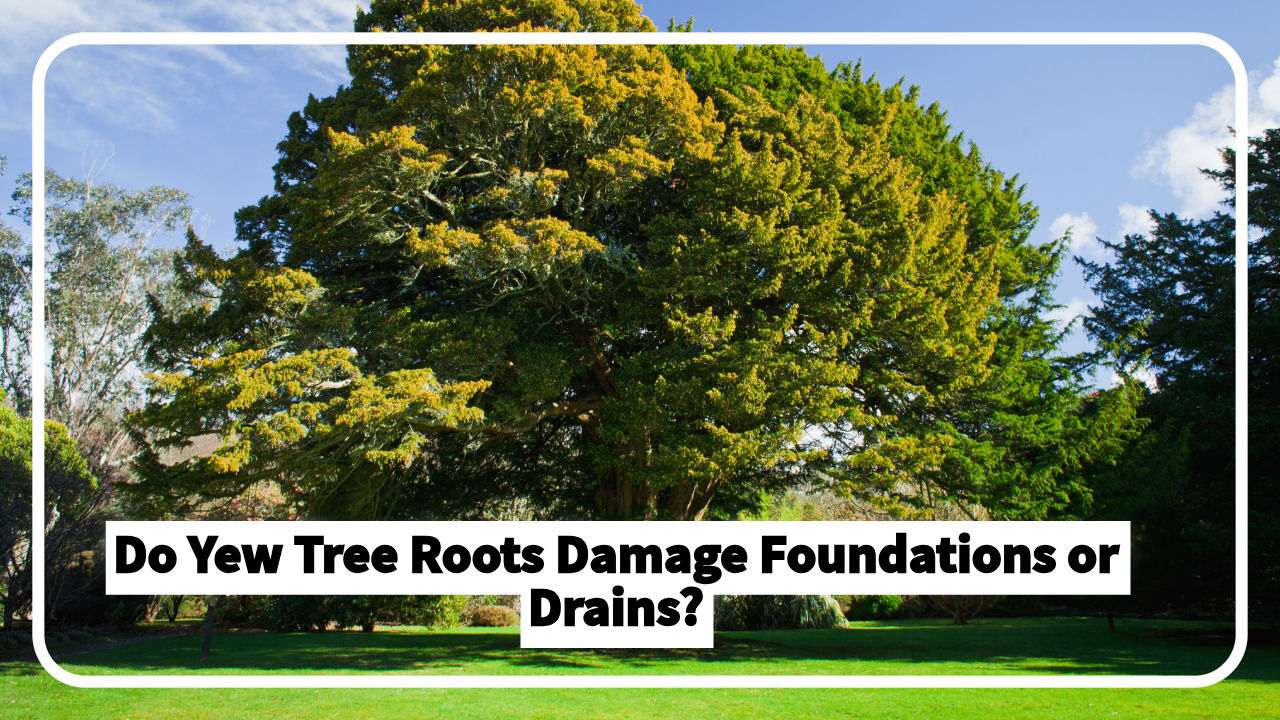
Yew trees are one of the UK’s most recognisable evergreen trees. They’re popular for hedging, topiary, and ornamental planting because they’re long-lived, dense, and relatively easy to maintain.
However, as Yew trees mature, homeowners often become concerned about what’s happening below ground.
Common questions include:
Will Yew roots damage my house?
Can they crack foundations?
Are they likely to block drains?
Should I remove a Yew tree growing close to my property?
The good news is that Yew tree roots are generally less aggressive than many homeowners fear. While they can contribute to certain problems in the right conditions, they don’t automatically damage buildings or underground pipes.
Here’s what you need to know.
How Do Yew Tree Roots Grow?
Like most trees, Yew roots are designed to search for:
Water
Oxygen
Nutrients
Rather than growing straight down, most roots spread outwards through the upper layers of soil.
A mature Yew tree can develop an extensive root system, often extending well beyond the edge of its canopy.
How far the roots spread depends on:
The age of the tree
Soil type
Available space
Moisture levels
Whether it’s a hedge or a single specimen tree
Can Yew Tree Roots Damage Foundations?
In most cases, Yew roots do not directly break or crack solid foundations.
The concern is usually indirect movement, particularly on properties built on shrinkable clay soils.
Here’s why.
Trees absorb water from the ground through their roots.
During prolonged dry weather, this can cause clay soils to shrink. If the ground beneath a building moves unevenly, it may contribute to movement in the foundations.
This can sometimes result in:
Cracks in walls
Sticking doors or windows
Minor structural movement
It’s important to remember that cracks in a property don’t automatically mean a nearby tree is responsible. Buildings can move for many different reasons, and a professional assessment is needed to identify the actual cause.
When Is the Risk Higher?
The likelihood of a tree contributing to foundation movement generally increases when:
The tree is mature and well established
It’s growing close to the property
The building sits on shrinkable clay soil
Existing structural movement is already present
The risk is usually lower when:
The tree is relatively small
The property has modern foundations
The soil is sandy or free-draining
The tree is several metres away from the building
Every property is different, so distance alone isn’t enough to determine whether a tree poses a risk.
Can Yew Roots Damage Drains?
Yes—but usually only if the drain is already damaged.
Healthy underground pipes are designed to keep roots out.
However, if a drain has:
Cracked pipes
Loose joints
Small leaks
tree roots may grow towards the moisture and enter through those existing openings.
Once inside, they can continue growing and gradually cause:
Blockages
Reduced water flow
Further damage to the pipe
In most situations, the roots didn’t create the problem—they exploited an existing weakness.
Signs Tree Roots May Be Affecting Drains
Possible warning signs include:
Drains backing up regularly
Slow-draining sinks or toilets
Gurgling sounds in the pipework
Wet patches in the garden
Unpleasant smells near drains
These symptoms don’t always mean tree roots are responsible.
A CCTV drain survey is often the quickest way to identify the cause before deciding what action to take.
Should You Remove a Yew Tree Because of Root Concerns?
Not necessarily.
Many mature Yew trees grow near homes for decades without causing any structural problems.
Removing a healthy tree should generally be considered only after a proper assessment.
Depending on the situation, an arborist may recommend:
Regular monitoring
Crown reduction to manage growth
Root investigations
Soil assessment
Ongoing maintenance
Tree removal is usually the last option rather than the first.
What Will an Arborist Assess?
If you’re worried about a Yew tree near your property, an arborist will typically consider:
The tree’s size and age
Distance from buildings
Soil type
Signs of root-related movement
Tree health
Drainage issues
Nearby structures
This provides a much clearer picture than making decisions based on the tree species alone.
When Should You Seek Professional Advice?
It’s worth arranging an inspection if:
Your Yew tree is growing close to your house
You notice new cracks in walls or paving
You suspect roots may be affecting drains
The tree has become very large
You’re planning an extension or other building work nearby
Getting professional advice early can help you understand whether the tree is genuinely causing a problem or whether another issue needs investigating.
How Arbsolve Can Help
If you’re concerned about a Yew tree, Arbsolve makes it easy to connect with verified arborists.
You can choose the option that works best for you.
Browse Local Arborists
Search the Arbsolve directory to find arborists in your area, compare professionals, and contact them directly.
Post Your Tree Concern
If you’d rather receive interest from local professionals, you can post your tree concern on Arbsolve.
Simply include:
Photos of the tree
A description of the issue
Your postcode
Any concerns about foundations or drains
Your request is shared with arborists covering your area.
Interested professionals can request the opportunity to provide a quote or inspection.
Your personal contact details and exact property address remain private until you choose which arborist you’d like to work with.
Final Thought
Yew tree roots are often blamed for property damage, but the reality is usually more complex.
While they can contribute to issues in certain situations—particularly on clay soils or where drains are already damaged—they’re not automatically a threat to your home.
Before considering expensive tree work or removal, it’s worth getting the tree professionally assessed.
A qualified arborist can help determine whether your Yew tree is genuinely causing a problem and recommend the most appropriate solution.
Making decisions based on evidence—not assumptions—is the best way to protect both your property and your trees.
Need Tree Work Done?
Get matched with vetted local arborists — free, no obligation.